Leave No Trace on Day Hikes: 7 Principles in Practice
How to apply the 7 Leave No Trace principles on a day hike: trash and food scraps, toilet stops, shortcuts, cairns, wildlife distances, dogs and photos.
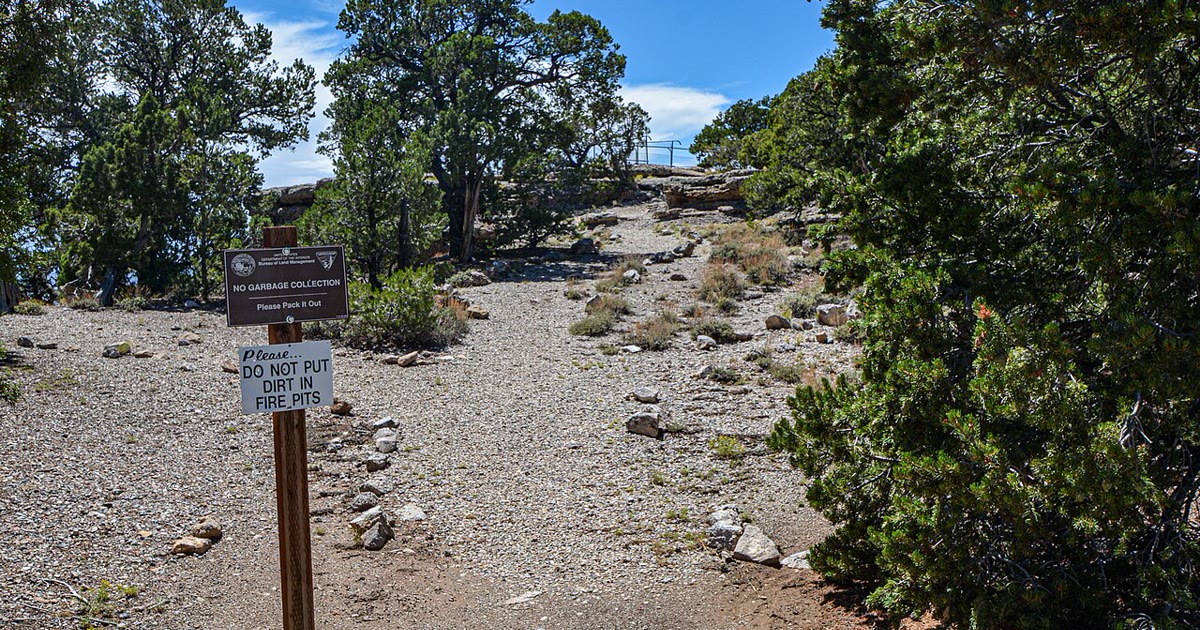
!A "No garbage collection, please pack it out" sign on a gravel trail on BLM land in Utah

"No garbage collection. Please pack it out." A reminder sign on Bureau of Land Management land in Utah. Photo: BLM Utah, via Wikimedia Commons, public domain (work of the U.S. federal government).

Most writing about Leave No Trace is aimed at backpackers: tents, bear bags, campfires. But most people on trails are day hikers with a small pack, a snack and a phone. The seven principles still apply to them. They just show up in different places: the apple core at the summit, the toilet stop halfway up, the muddy patch you're tempted to walk around, the deer you'd like a closer photo of. This guide applies each principle to a day hike, using guidance from the Leave No Trace Center for Outdoor Ethics and the U.S. National Park Service. Where a park, forest or landowner has its own rules, theirs win.
It follows our post on trail etiquette and right of way, which covers yielding, dogs, drones and music. This one is about the mark you leave on the place.
The 7 principles in one list
The Leave No Trace Center publishes seven principles:
1. Plan ahead and prepare
2. Travel and camp on durable surfaces
3. Dispose of waste properly
4. Leave what you find
5. Minimize campfire impacts
6. Respect wildlife
7. Be considerate of others
1. Plan ahead: most impact is decided at home
Leave No Trace's planning basics include knowing the regulations and special concerns for the area, preparing for weather, hazards and emergencies, avoiding times of high use, visiting in small groups (splitting larger parties into smaller ones), and repackaging food to cut down on waste.
For a day hike, that means:
- Read the land manager's page for the trail: dogs, fire bans, trailhead toilets, closures for restoration or nesting.
- Repackage snacks at home into one reusable bag, so there are fewer small wrappers to blow away at a windy lunch spot.
- Pack a zip bag for trash, and plan the toilet question (trowel, bag for used paper) if the route has no toilets.
- Know your route well enough not to improvise. The Leave No Trace planning principle suggests using a map and compass rather than relying on cairns, flagging or marking paint. Today that often means a downloaded map, and our guide to offline maps for hiking covers how to make sure it works without signal.
Leaving your route and return time with someone at home is part of the same habit; our day-hike safety checklist walks through the rest.
2. Durable surfaces: stay on the trail, even when it's muddy
According to Leave No Trace, durable surfaces include established trails, rock, gravel, dry grasses and snow. Wet meadows and other fragile vegetation show trampling quickly, and once one person tramples a path, others tend to follow it.
Mud. Stepping around a muddy patch widens the trail a little more each time. Leave No Trace's guidance is to walk single file in the middle of the trail, "even when wet or muddy." Waterproof boots or gaiters make this easier, and our beginner day-hike gear checklist covers footwear.
Switchbacks. Cutting straight down between the zigzags of a trail feels faster, but Leave No Trace asks hikers to stay within the trail's width and not shortcut switchbacks.
Breaks and toilet stops. Step off onto rock, gravel or bare ground rather than vegetation. When a group has to go off-trail, Leave No Trace suggests spreading out rather than walking single file, so no new path forms.
Snow counts as a durable surface when it's deep enough. Leave No Trace gives 6 inches (about 15 cm) or more as the depth that protects the vegetation underneath. Thin, patchy snow does not.
3. Waste: pack it in, pack it out, including the "natural" stuff
The core rule is short: pack out all trash, leftover food and litter. On a day hike, the hard cases are the ones that don't feel like trash.
Food scraps
Peels, apple cores and pistachio shells feel harmless because they're organic. Leave No Trace's "trash timeline" article, which draws on a USDA Forest Service study, lists orange and banana peels at up to 2 years to break down, and warns that leaving food behind attracts wildlife and can lead to animals becoming used to human food. Before leaving a lunch spot, Leave No Trace suggests checking the ground for micro-trash, including those peels and shells.
The same article gives these rough timelines for other common trail litter. It stresses that real decomposition depends on sunlight, moisture, soil and more:
| Item | Time to break down (Leave No Trace trash timeline) |
|---|---|
| Orange or banana peel | Up to 2 years |
| Cigarette butt | 1 to 5 years |
| Food wrappers, plastic-coated paper | Up to 5 years |
| Aluminum can | 80 to 100 years |
| Plastic bottles | Studies vary; they break into smaller pieces |
Toilet stops
Use the trailhead toilet if there is one. Otherwise, Leave No Trace's guidance is:
- Urine: go at least 200 feet (about 70 to 80 adult paces) from trails and water, ideally on rock, gravel or pine needles, because the salts can attract animals that damage plants.
- Solid waste: dig a cathole 6 to 8 inches (15 to 20 cm) deep and 4 to 6 inches across, at least 200 feet from water, trails and camp, then fill it in and disguise it. Avoid dry washes and gullies where water flows after rain.
- Toilet paper: bury it deep in the cathole or pack it out. Leave No Trace says packing it out is best in deserts and other dry places.
- Wipes: pack them out, even if they're labeled biodegradable.
- Menstrual products: pack them out. Leave No Trace says not to bury pads and tampons, because they don't decompose readily and animals may dig them up.
An opaque zip bag is a discreet way to carry paper and hygiene items home. In some fragile alpine, desert and canyon areas, land managers require you to pack out solid human waste too, using a commercial waste bag kit. Check the area's rules when you plan.
Dog waste
Bag it and take it with you. Leave No Trace's guidance says pet waste can contaminate water and harm wildlife. The UK's Countryside Code puts it plainly: "bag it and bin it" in any public waste bin, or take it home.
4. Leave what you find, including the rocks
Leave No Trace asks visitors to leave rocks, plants and natural objects as they find them, and not to touch cultural or historic artifacts. In U.S. national parks, natural objects are protected by law, and the Archaeological Resources Protection Act makes removing artifacts such as arrowheads from U.S. public lands illegal. The UK Countryside Code says the same: leave rocks, plants and trees as you find them.
On a day hike, this usually means:
- Wildflowers. One picked flower seems trivial. Leave No Trace's point is that if every visitor thought "I'll just take a few," the plants and the pollinators that depend on them would feel it. Take a photo instead.
- Rock stacks. Building your own cairn or adding a stone to one is not harmless decoration. The National Park Service explains that in parks such as Acadia, Hawaiʻi Volcanoes and Canyonlands, staff build and maintain cairns to mark routes. An extra or altered cairn can send later hikers the wrong way, and moving rocks disturbs soil and small habitats. The NPS advice is: don't knock cairns down, don't add to them, and don't build new ones.
- Carving. Leave No Trace notes that carving into trees can make them more susceptible to disease.
5. Campfires: on most day hikes, you don't need one
The Leave No Trace basics for fire are to use a stove when you can and to keep any fire small, contained and legal. Day hikers rarely need a fire at all. If you want a hot drink at the summit, a flask or a small stove used where stoves are allowed does the job.
Check fire restrictions before you go. The Countryside Code tells visitors not to light fires and to use barbecues only where signs allow them. If you smoke, carry your butts out.
6. Respect wildlife: distance, no feeding, dog on a leash
Leave No Trace's basics: observe wildlife from a distance, don't follow or approach animals, never feed them, control pets at all times, and avoid wildlife during sensitive times such as mating, nesting, raising young and winter.
How far is far enough? It depends on the place, and some parks set a legal minimum. Yellowstone National Park, for example, tells visitors to stay at least 100 yards (91 m) from bears, wolves and cougars and at least 25 yards (23 m) from all other animals, including bison and elk. If an animal moves closer, back away. A simple test: if the animal changes what it's doing because of you, you're too close.
Leave No Trace explains that human food is unhealthy for wildlife and can teach animals to depend on people and lose their fear of them. That includes crumbs for the squirrels at a busy summit.
Wildlife can see a dog as a predator. Leave No Trace recommends a leash, or voice control with the dog always in sight, and some areas require a leash.
7. Be considerate of others
The etiquette post covers yielding. Leave No Trace adds:
- Take breaks away from the trail so others can pass, and step aside onto rock or dry grass.
- Let nature's sounds prevail. For music, Leave No Trace suggests one earbud, so you still hear people behind you.
- Leave gates as you find them on farmland, as the Countryside Code asks.
Photos and geotags
Leave No Trace says it is not anti-geotagging. Its social media guidance asks you to consider what your photos encourage others to do (a shot from a fragile meadow, or close to wildlife, invites copying) and to add Leave No Trace tips to the caption. It also says online shaming "is never endorsed" by Leave No Trace.
A Leave No Trace kit for your day pack
It weighs almost nothing: two zip bags (your trash and found trash), toilet paper with an opaque bag to pack it out, a small trowel where catholes are allowed, hand sanitizer, and dog bags and a leash if your dog is coming.
TrailsPals can share your route live with someone at home while you hike, but none of the principles above depends on any app.
FAQ
What are the 7 principles of Leave No Trace?
Plan ahead and prepare; travel and camp on durable surfaces; dispose of waste properly; leave what you find; minimize campfire impacts; respect wildlife; and be considerate of others. They're published by the Leave No Trace Center for Outdoor Ethics.
Is it okay to throw an apple core or orange peel off the trail?
No. Leave No Trace's trash timeline says orange and banana peels can take up to 2 years to break down, and food scraps attract wildlife to people. Pack out all food waste.
Where do I go to the toilet on a hike with no restrooms?
Leave No Trace recommends going at least 200 feet (about 70 to 80 adult paces) from water, trails and camp. For solid waste, dig a cathole 6 to 8 inches deep, then fill it and disguise it. Bury or pack out toilet paper, and always pack out wipes and menstrual products. Some areas require all waste to be packed out.
Is it bad to stack rocks or build cairns on a hike?
Yes, on most trails. The National Park Service explains that official cairns mark routes, and extra or altered ones can mislead other hikers. Moving rocks also disturbs soil and small habitats. Don't build, add to or knock down cairns.
How far should I stay from wildlife on a hike?
Follow the local rule where there is one. Yellowstone, for example, tells visitors to stay at least 100 yards (91 m) from bears, wolves and cougars and 25 yards (23 m) from other animals. Never approach, follow or feed wildlife.
Sources
- Leave No Trace Center for Outdoor Ethics: The 7 Principles
- Leave No Trace: Principle 1: Plan Ahead and Prepare
- Leave No Trace: Principle 2: Travel and Camp on Durable Surfaces
- Leave No Trace: Principle 3: Dispose of Waste Properly
- Leave No Trace: Principle 4: Leave What You Find
- Leave No Trace: Principle 6: Respect Wildlife
- Leave No Trace: Principle 7: Be Considerate of Others
- Leave No Trace: Skills Series: Trash Timeline
- Leave No Trace: Social Media Guidance
- National Park Service: Rock Cairns
- Yellowstone National Park (NPS): Safety
- GOV.UK: The Countryside Code: advice for countryside visitors