Hut-to-Hut Hiking Packing List: What to Bring and Skip
What to pack for hut-to-hut hiking in the Alps: liner, hut clothes, cash, layers, pack size and weight, and what the huts already provide.
Hut-to-hut hiking is the closest thing the mountains have to a free upgrade. Instead of carrying a tent, stove and a week of food, you walk from one staffed mountain hut to the next, eat dinner someone else cooked, and sleep under a blanket at altitude. The catch is that a hut trek still asks you to carry everything you need for several days, up and down big climbs, in one pack.
This list is built for staffed huts and refuges in the Alps: Alpine club huts in Germany, Austria, Switzerland and South Tyrol, and the refuges on routes like the Tour du Mont Blanc. It focuses on what is different from a day hike: what the huts give you, what they expect you to bring, and what you can leave at home. Where we give rules or numbers, they come from the German Alpine Club (DAV) and the official Mon Tour du Mont Blanc checklist, listed at the end.
If you are still choosing a route, start with our Tour du Mont Blanc first-timer guide, then come back here to pack.
!Rifugio Walter Bonatti above Val Ferret on the Tour du Mont Blanc

Rifugio Walter Bonatti, Val Ferret, Italy. Photo: Cboon, CC BY-SA 3.0, via Wikimedia Commons.

The golden rule: light, but not at the cost of safety
The DAV's own packing advice for hut nights sums it up: take only what matters most, but never skip safety gear such as a first-aid kit and a bivvy bag. On Alpine trips you carry the pack over long distances and steep climbs and descents, and a pack that is too heavy quickly spoils the tour.
How light is light? The Mon Tour du Mont Blanc refuge checklist gives useful targets for a TMB staying in refuges:
- Light: 5 to 7 kg
- Comfortable: 7 to 9 kg
- Over 10 kg: there is usually room to lighten your load
Their gear article puts it as aiming for 8 to 10 kg including water. Weigh your packed bag before you leave home. It is the single most useful check you can do.
What the huts usually provide
Knowing what is already there is how you save weight. In most staffed Alpine huts you can expect:
- A mattress, plus blankets or a duvet and a pillow. You don't need a full sleeping bag if you are sleeping in huts every night. The beds are not made up with fresh sheets for each guest, which is why the liner below matters.
- Dinner and breakfast if you book half board, and usually drinks and snacks to buy during the day. Check each hut's offer when you reserve.
- Hut slippers in many huts. The DAV Kaiserslautern section notes that slippers, books and board games are available in most huts, so heavy items like these can stay at home. Not every hut provides them, though, which is why light backup footwear is on the list below.
!Bunks with blankets and pillows in the dormitory of the Refuge du Lac Blanc

Dormitory at the Refuge du Lac Blanc, Aiguilles Rouges. Photo: Rémih, CC BY-SA 4.0, via Wikimedia Commons.

What huts generally do not provide: towels, toiletries, earplugs, and a guaranteed place to charge your phone. Showers are often absent; the DAV describes hut stays as "no feather beds, mostly no showers, and strangers in the room".
The hut-night kit (the part people forget)
These are the items that make a hut trek different from a long day hike.
1. Sleeping bag liner (hut sleeping bag). This is the big one. The DAV asks every guest to bring their own hut sleeping bag, for hygiene, because blankets and bedding are not washed after every use. You can often buy or borrow one at the hut, but your own is cheaper over a whole trek. The TMB checklist marks a liner as "often mandatory" in refuges. Silk and thin synthetic liners pack smaller and weigh less than cotton ones.
2. Earplugs. Both the DAV and the TMB checklist recommend them. Dormitories can hold many people, and someone will snore. The DAV Kaiserslautern section adds a dry joke: if you snore yourself, bring two packs.
3. Headlamp. For the night-time walk to the toilets and for packing in the dark without waking the room.
4. Small quick-dry towel and a minimal wash kit. Toothbrush, small toothpaste, a bar of soap, deodorant if you want it. The TMB gear article says a bar of soap, a toothbrush and a small tube of toothpaste are enough, and every gram saved is felt on the trail.
5. Dry clothes for the evening. A clean T-shirt and light trousers or shorts, so you can change out of sweaty hiking clothes. Nobody is judging outfits in a hut dining room.
6. Light hut footwear as a backup. Flip-flops, Crocs or non-slip socks, as the TMB checklist suggests, for huts that don't provide slippers.
7. Sleep mask (optional). Useful in summer when the sun rises early.
8. A small rubbish bag. The DAV asks hikers to carry their waste back down to the valley.
!Shared hut slippers in Chamanna Jenatsch, a Swiss Alpine Club hut
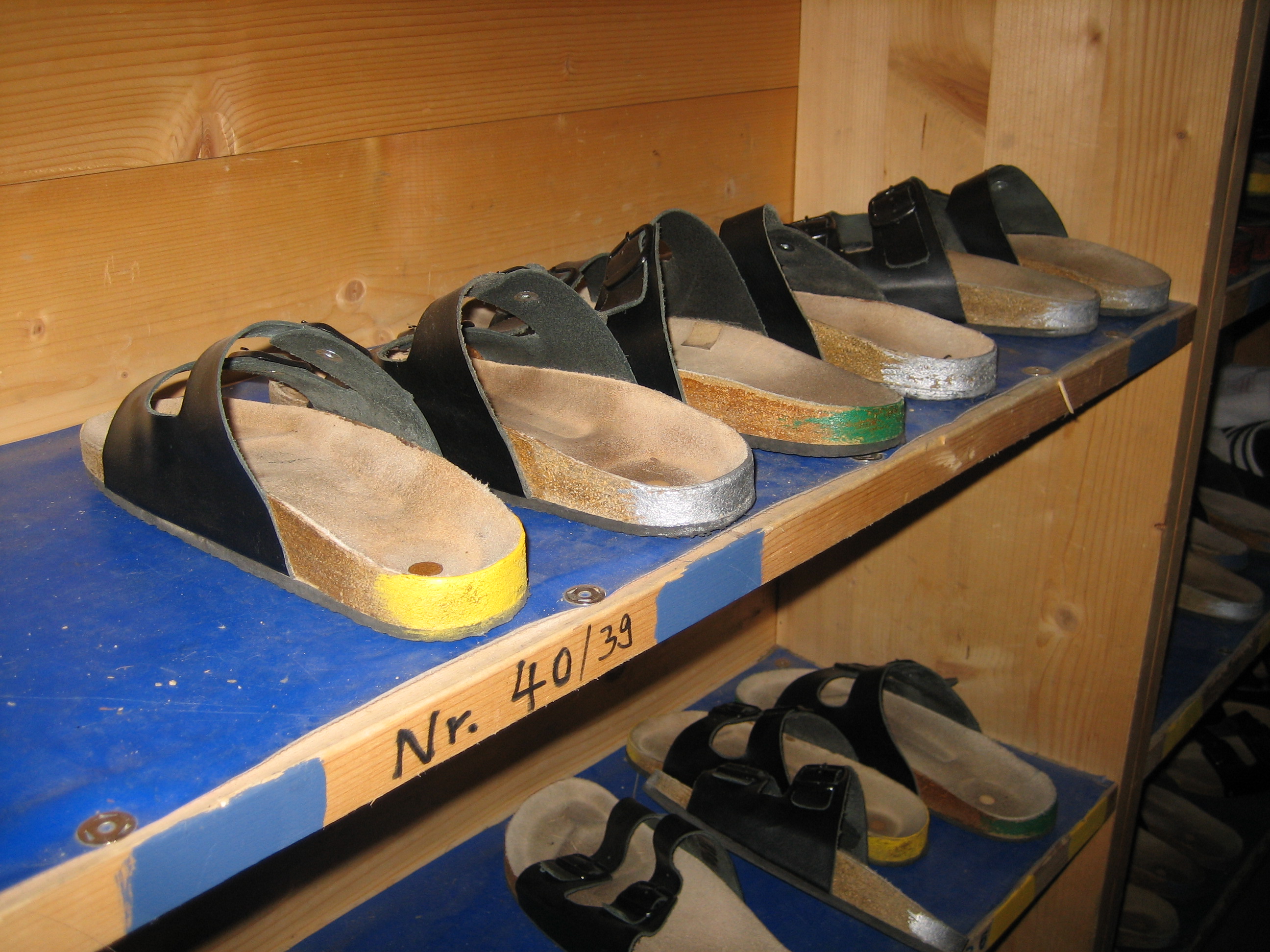
Hut slippers in Chamanna Jenatsch, Switzerland. Photo: Capricorn4049, CC BY-SA 3.0, via Wikimedia Commons.

Money, documents and bookings
- Cash. The DAV says many huts cannot take card payments because there is no network coverage or power, so bring enough cash. On a cross-border route like the TMB, carry the right currencies and check each hut's payment options before you go.
- ID or passport. The TMB checklist lists it because the route crosses France, Italy and Switzerland.
- Alpine club membership card if you have one. Under reciprocal-rights agreements (Gegenrecht), Alpine club members can stay at reduced rates at certain huts run by other Alpine associations. Check your club's terms.
- Insurance details and emergency numbers. 112 is the European emergency number in France, Italy and Switzerland. The TMB checklist notes it works without credit or a local SIM through any available network, but not where there is no signal at all. Without signal, go to the nearest refuge and ask the warden.
- Your hut reservations, printed or on your phone. The DAV recommends booking ahead, especially in the summer holiday peak. Some huts take a deposit and can charge cancellation fees, and each hut sets its own rules, so cancel early if your plans change.
Clothing for changing mountain weather
Hut treks cross high passes where the weather can turn fast, and the DAV Kaiserslautern section warns that it can get cold and windy quickly at altitude. Build a layering system rather than packing for one temperature. The TMB refuge checklist is a good baseline:
- 2 technical T-shirts and 2 to 3 pairs of hiking socks
- 1 pair of hiking shorts or trousers
- 2 to 3 pairs of technical underwear
- A lightweight fleece and a packable down jacket
- A beanie and gloves, even in summer
- A waterproof, breathable jacket and waterproof overtrousers
- A cap or sun hat
The DAV adds thermal base layers, durable mountain trousers and a change of underwear depending on tour length. On a multi-day trip you will hike in the same outfit several days in a row; that is normal. If rain is in the forecast, our guide to hiking in the rain covers how to keep the layers that matter dry.
Footwear
Sturdy hiking boots or shoes with a grippy sole, already broken in. The TMB checklist is explicit about "well broken-in"; new boots on day one of a 10-day trek are a blister factory. Spare laces are optional but weigh almost nothing.
Backpack and rain protection
- Size: the DAV suggests 30 to 40 litres depending on tour length. Mon Tour du Mont Blanc suggests 35 to 45 litres for a TMB staying in refuges. Their gear article stresses that fit matters more than volume: a good hip belt should carry the weight, not your shoulders, and nothing should hang off the outside.
- Rain cover for the pack.
- Dry bags or a plastic bag inside to keep your liner and evening clothes dry. Arriving at a hut with a wet sleeping kit is miserable.
Food and water
Most hut-to-hut hikers eat dinner and breakfast in the huts and carry only trail food:
- A 1.5 to 2 litre water bottle or bladder (the DAV says ideally at least 2 litres)
- Energy bars, dried fruit and nuts
- A small box for a packed lunch, if your hut sells one
Navigation and power
- Phone with offline maps, plus a paper map. The TMB checklist suggests the IGN 1:25,000 map on the French side; on other routes, carry the local topographic map.
- Power bank (the TMB checklist suggests 5,000 to 10,000 mAh) and your charging cable. Power is limited in many huts and the DAV asks guests to save electricity and water, so don't count on a free socket every night. Our battery strategy for GPS hiking explains how to make one phone charge last a full day on trail.
Mobile coverage is patchy in high valleys. If someone at home will worry, leave them your hut-by-hut itinerary and agree on check-in times. A live trip-sharing app such as TrailsPals can show them your progress whenever your phone has signal.
Safety and first aid
From the DAV and TMB lists combined:
- Small first-aid kit with blister plasters, disinfectant, painkillers and personal medication
- Bivvy bag or emergency blanket
- Whistle
- Sun protection: SPF 50 sunscreen, lip balm, and category 3 or 4 sunglasses
Nice to have
- Trekking poles. The DAV calls them not a must but very useful and easing the load, especially on long descents.
- Camera, if your phone is not enough.
- Hand sanitiser and some toilet paper.
What to leave at home
- A full sleeping bag, if every night is in a staffed hut with blankets.
- Heavy hut shoes, when your huts provide slippers.
- Big toiletry bags, books, a thick wallet and extra electronics. The DAV Kaiserslautern section suggests keeping valuables and electronics to the minimum.
- Technical mountaineering kit on non-glaciated trails like the TMB, unless your route specifically needs it.
Quick checklist
If you only print one thing, print this:
- [ ] Sleeping bag liner
- [ ] Earplugs and headlamp
- [ ] Quick-dry towel and minimal wash kit
- [ ] Evening T-shirt and light trousers
- [ ] Flip-flops or non-slip socks (backup)
- [ ] Cash, ID, Alpine club card, insurance details
- [ ] Hut reservations
- [ ] Waterproof jacket and overtrousers
- [ ] Fleece, packable down jacket, beanie, gloves
- [ ] 30 to 45 L pack, rain cover, dry bags
- [ ] 1.5 to 2 L water and trail snacks
- [ ] Phone with offline maps, paper map, power bank
- [ ] First-aid kit, bivvy bag or emergency blanket, whistle
- [ ] Sunscreen, lip balm, sunglasses, sun hat
- [ ] Trekking poles (optional)
- [ ] Small rubbish bag
Most of your day-hike kit still applies; our beginner day-hike gear checklist covers the basics in more detail. Then look up each hut's website before you go, as the DAV advises, since individual huts can have their own rules.
Do I need a sleeping bag for hut-to-hut hiking in the Alps?
Usually not. Alpine club huts and TMB refuges provide mattresses with blankets or duvets, but you are expected to bring your own sleeping bag liner (hut sleeping bag) for hygiene. Many huts sell or rent one if you forget.
Is a sleeping bag liner mandatory in mountain huts?
The German Alpine Club (DAV) asks every guest to bring their own hut sleeping bag, or buy or borrow one at the hut. The official Tour du Mont Blanc checklist says a liner is often mandatory in refuges.
Do mountain huts take credit cards?
Not always. The DAV says many huts cannot take card payments because of missing network coverage or power, so bring enough cash, and check each hut's own payment rules before you go.
Do I need to bring hut slippers?
Many huts provide shared hut slippers, but not every hut does. The TMB checklist lists flip-flops, Crocs or non-slip socks, so a very light pair is a sensible backup.
How big a backpack do I need for hut-to-hut hiking?
The DAV suggests 30 to 40 litres depending on tour length. Mon Tour du Mont Blanc suggests 35 to 45 litres for a TMB staying in refuges, with a total of 8 to 10 kg including water.
Can I charge my phone in mountain huts?
Sometimes, but power is often limited and huts ask guests to save electricity and water. Carry a power bank; the TMB checklist suggests 5,000 to 10,000 mAh.
Sources
- German Alpine Club (DAV), Packing list for a hut overnight (German)
- German Alpine Club (DAV), Tips for staying in a hut (German)
- German Alpine Club (DAV), Staying at Alpine club huts (German)
- DAV Kaiserslautern section, The right gear for a hut tour (German)
- Mon Tour du Mont Blanc, Tour du Mont-Blanc gear checklist
- Mon Tour du Mont Blanc, refuge equipment checklist (PDF)
- Wikimedia file page, Rifugio Walter Bonatti (Cboon)
- Wikimedia file page, Refuge du Lac Blanc dormitory (Rémih)
- Wikimedia file page, slippers in Chamanna Jenatsch (Capricorn4049)